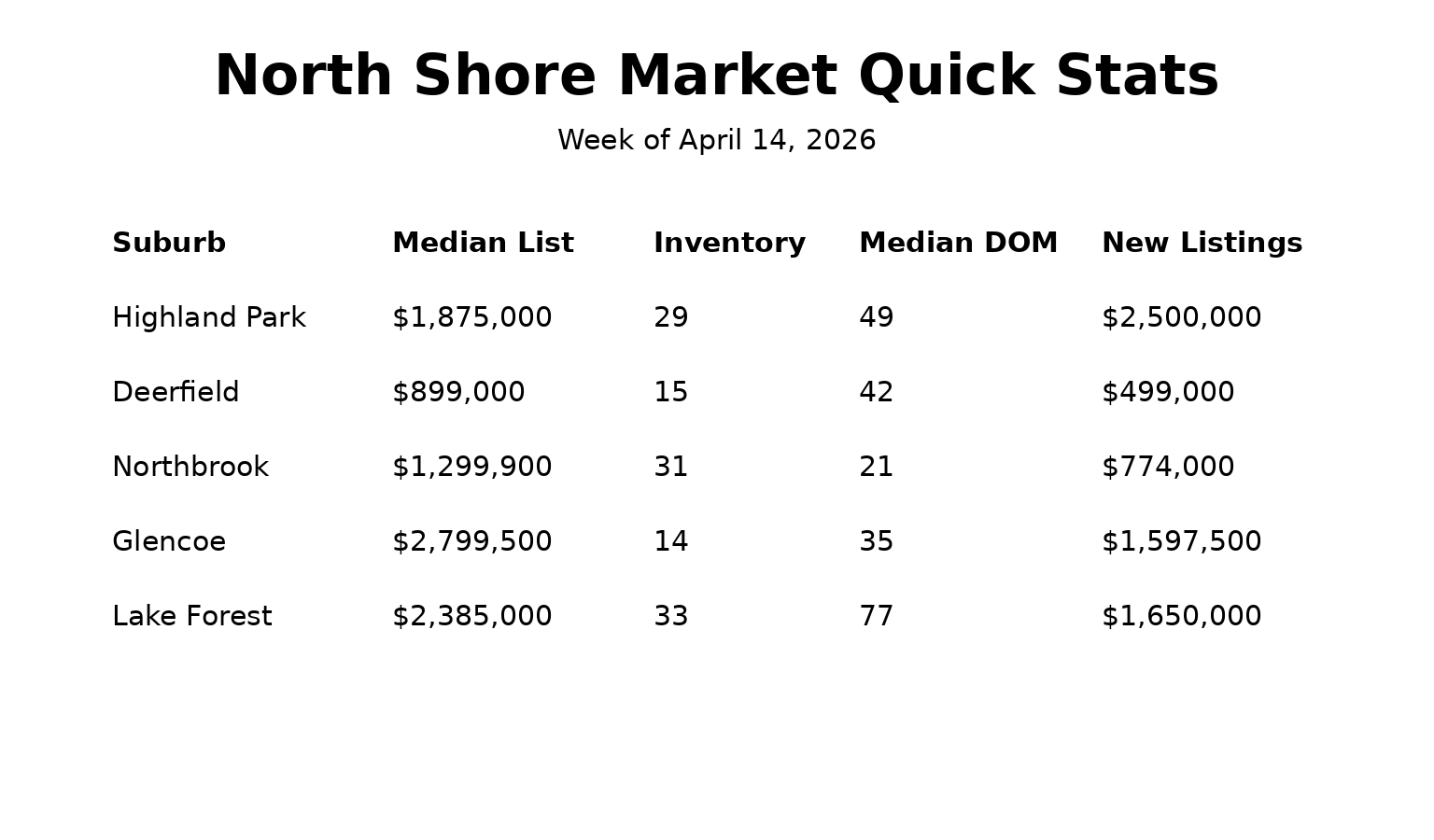
Week of April 14, 2026
Data sourced from Altos Research. Updated every Tuesday.
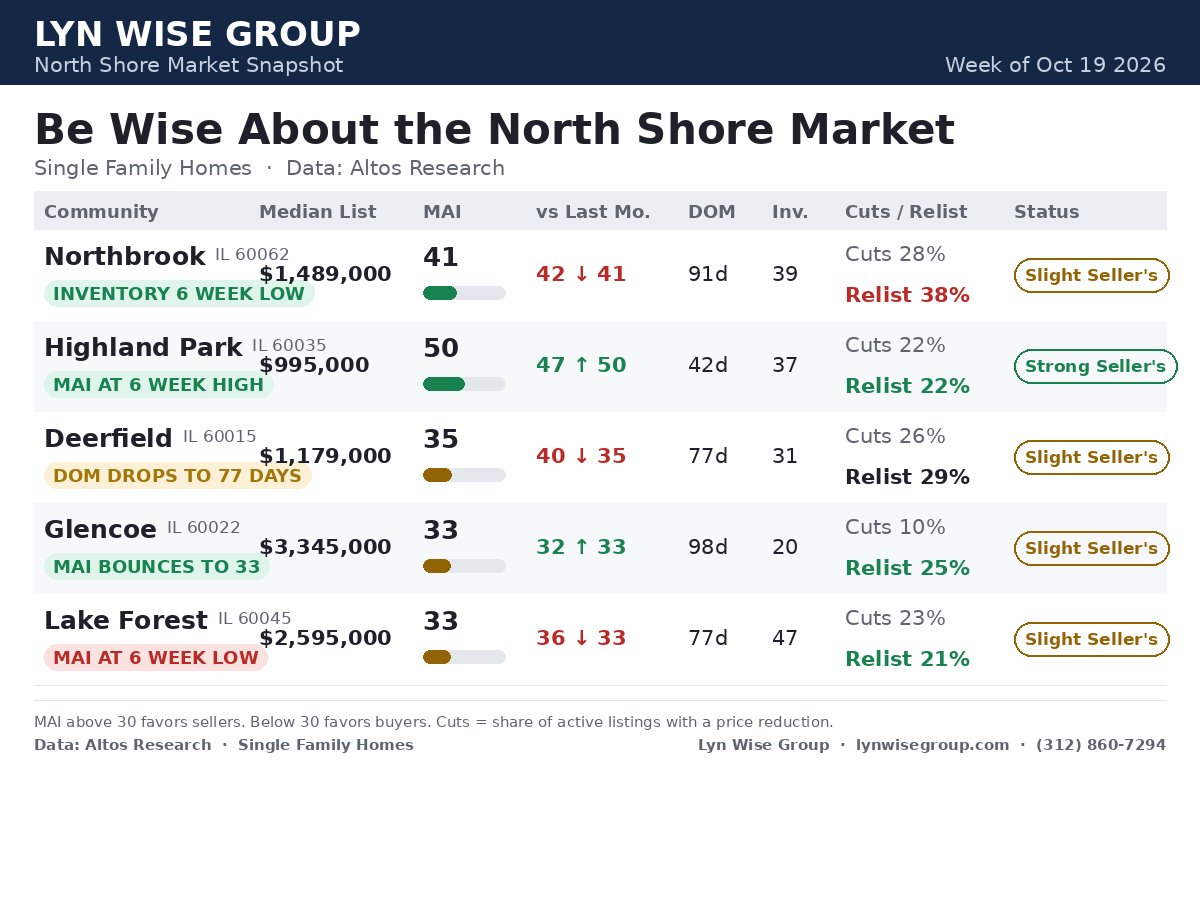
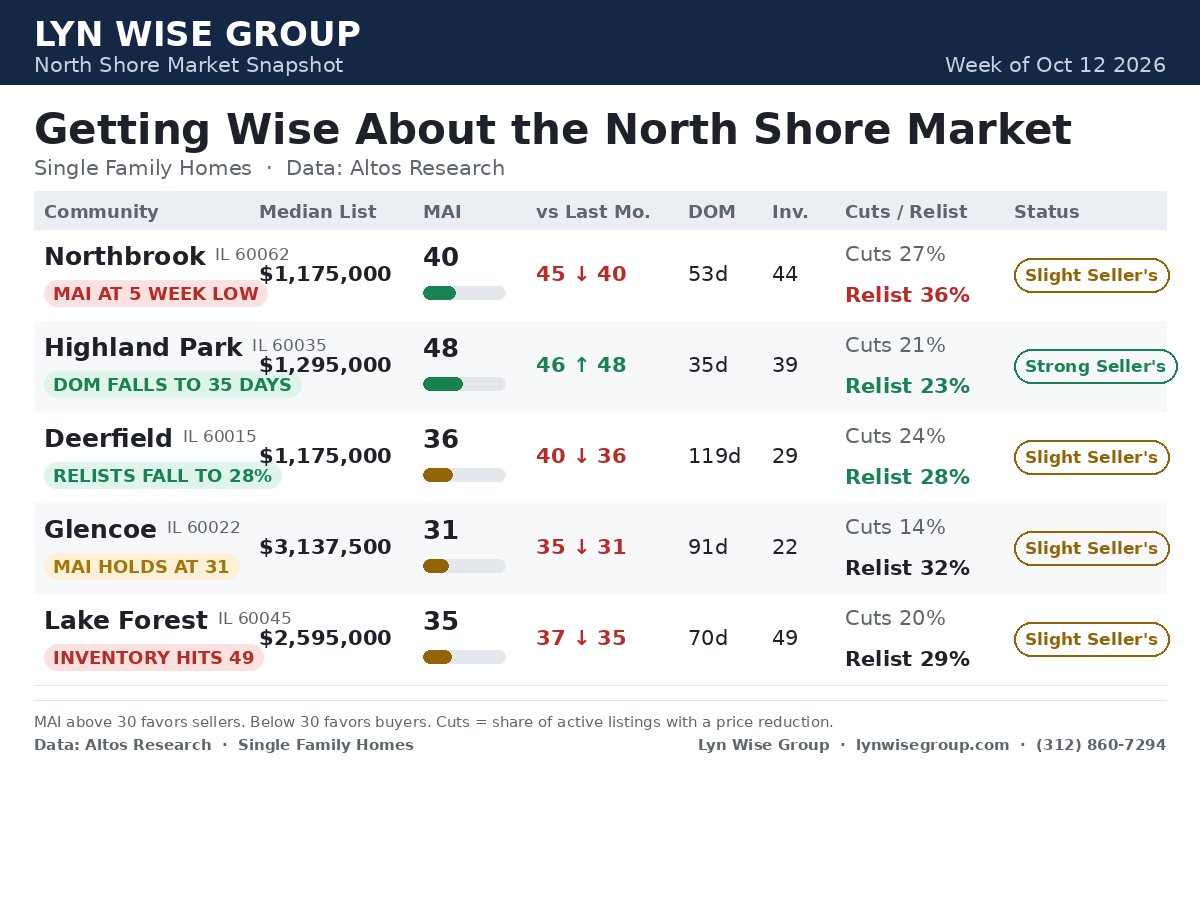
The market isn’t just splitting — it’s showing a clear progression from competition → balance → leverage. I focused on Highland Park, Deerfield, Northbrook, Glencoe, Lake Forest this week as these suburbs had more activity and changes in the market this past week.
Be Wise About the Market
If you’re trying to understand the market right now, here’s the reality: It’s not one market. It’s a progression. From intense competition… to balance… to negotiation. And depending on where you are — and what price point you’re in — the experience can feel completely different.
This week’s data from Highland Park, Deerfield, Northbrook, Glencoe, and Lake Forest makes that shift very clear.
The Story This Week: A Market in Transition
The most interesting takeaway this week is not whether the market is “hot” or “cool.” It’s how differently it behaves depending on the segment.
- Some homes are still getting immediate attention
- Some are sitting longer and adjusting
- Some are quietly giving buyers leverage
That’s not randomness. That’s structure.
Deerfield — The Competition Market
Deerfield is the clearest example of a market where demand is still driving everything.
- Inventory dropped to just 15 homes
- Market strength increased again
This is where buyers are still:
- moving quickly
- competing
- adjusting expectations after losing prior homes
For buyers: You’re not imagining it — this is where it’s hardest to win right now. For sellers: If your home is priced correctly, demand is already there.
Highland Park — The Transition Market
Highland Park is doing something more subtle.
- Inventory is rising (29 homes)
- Price reductions are increasing (21%)
That combination tells a very specific story: More options for buyers. More pressure on sellers to get pricing right
For buyers: You may have more opportunity here than you think, especially on homes that miss the mark early. For sellers: The market is still strong — but no longer automatic. The first 10–14 days matter more than ever.
Northbrook — The Early Balance Shift
Northbrook is slightly further along that transition.
- Inventory climbed to 31 homes
- Relisting activity is high (29%)
- Early signs of price pressure
This is where behavior starts to change. Buyers are no longer reacting — they’re comparing.
For buyers: This is one of the best places right now to negotiate, especially above $1.2M. For sellers: Testing the market high is starting to backfire.
Glencoe — The Selective Luxury Market
Glencoe tells a very different story.
- Demand has been low relative to supply
- Prices have been trending down
- Relist activity is elevated
This is not a weak market — it’s a highly selective one. For buyers: This is where patience pays off. You have leverage — especially at higher price points. For sellers: You are competing — not just listing. Pricing and positioning are critical.
Lake Forest — Where Time Becomes Leverage
Lake Forest might be the most telling market this week.
- 156 average days on market
- Inventory at 33 homes
- Market sitting in equilibrium but with upward price pressure
This is a market where: Buyers take their time. Sellers need patience. Negotiation becomes part of the process. For buyers: Time is your advantage here. For sellers: The right buyer exists — but they are not rushing.
Mortgage Update
Mortgage rates moved slightly higher over the past week and are currently sitting in the mid-6% range. What’s notable is that buyer behavior hasn’t slowed — it’s adapted. Buyers are moving faster in competitive markets and negotiating more in balanced ones. Rates are influencing strategy, not stopping activity.
The Real Takeaway
This week’s market is not about whether it’s a good time to buy or sell. It’s about understanding which version of the market you’re in.
- Deerfield → compete
- Highland Park → timing matters
- Northbrook → negotiate
- Glencoe → be selective
- Lake Forest → use time
Bottom Line
The North Shore market isn’t slowing. It’s evolving. And right now, success comes down to understanding how buyers are behaving — not just what the numbers say.